Impulse Wallet
Complete Onboarding Guide
Transform your self-control into a game you actually want to play
🚀 Quick Start (2 minutes)
🎯 Your Weekly Goal: Reach $10
Each week, your target is to reach $10 by making deposits (+$1 for good choices). When you hit $10, you'll trigger a celebration animation! Your wallet resets every Monday at 12:01 AM, giving you a fresh start each week.
- Join or Create Room - The first screen you'll see! Connect with others for accountability or create a new room and set it to invite-only for solo use
- No Signup Required - Just open the app and you're ready to go with your anonymous account
- Choose Focus Areas - Click "Weekly Focus" to pick 2-3 areas for this week (these are private to you - others can't see your specific areas)
- Start Tracking Toward $10 - Use +$1 for good choices, -$1 for slips. Your goal is to reach $10 by the end of the week!
Ready to dive deeper? Continue reading for the complete experience.
Understanding Impulse Wallet
What Is Impulse Wallet?
Impulse Wallet is your personal accountability partner that transforms self-control into a simple, gamified experience. Instead of complex habit tracking that overwhelms you, we use a straightforward virtual wallet system where:
💰 Simple Dollar System
Good choices = +$1 deposits
Giving in to impulses = -$1 withdrawals
Weekly goal: Reach $10!
🎯 Weekly Focus Areas
Choose 2-3 areas to focus on each week, with fresh starts every Monday
👥 Accountability Rooms
Optional private groups with invite codes where members see each other's progress toward the $10 goal
🔄 Weekly Resets
Your wallet resets every Monday at 12:01 AM, giving you permission to start fresh and aim for $10 again
Core Philosophy
We believe that:
- Simplicity beats complexity - One dollar up or down is instantly clear
- Fresh starts matter - Your wallet resets every Monday
- Accountability works - You're 65% more likely to succeed with gentle peer support
- Progress over perfection - It's about building momentum, not being flawless
- Privacy is essential - No email required, anonymous usernames, secure rooms
Getting Started Solo
First Visit Walkthrough
- Room Creation Interface: You can create a new room or join an existing room
- Anonymous Account: We automatically create an anonymous account using a secure UUID - no email required. You can use any display name you prefer (real name or pseudonym)
- Empty Wallet: Once you set up or join a room, you'll see the main wallet interface with $0 balance, action buttons ready for use, and access to focus area setup
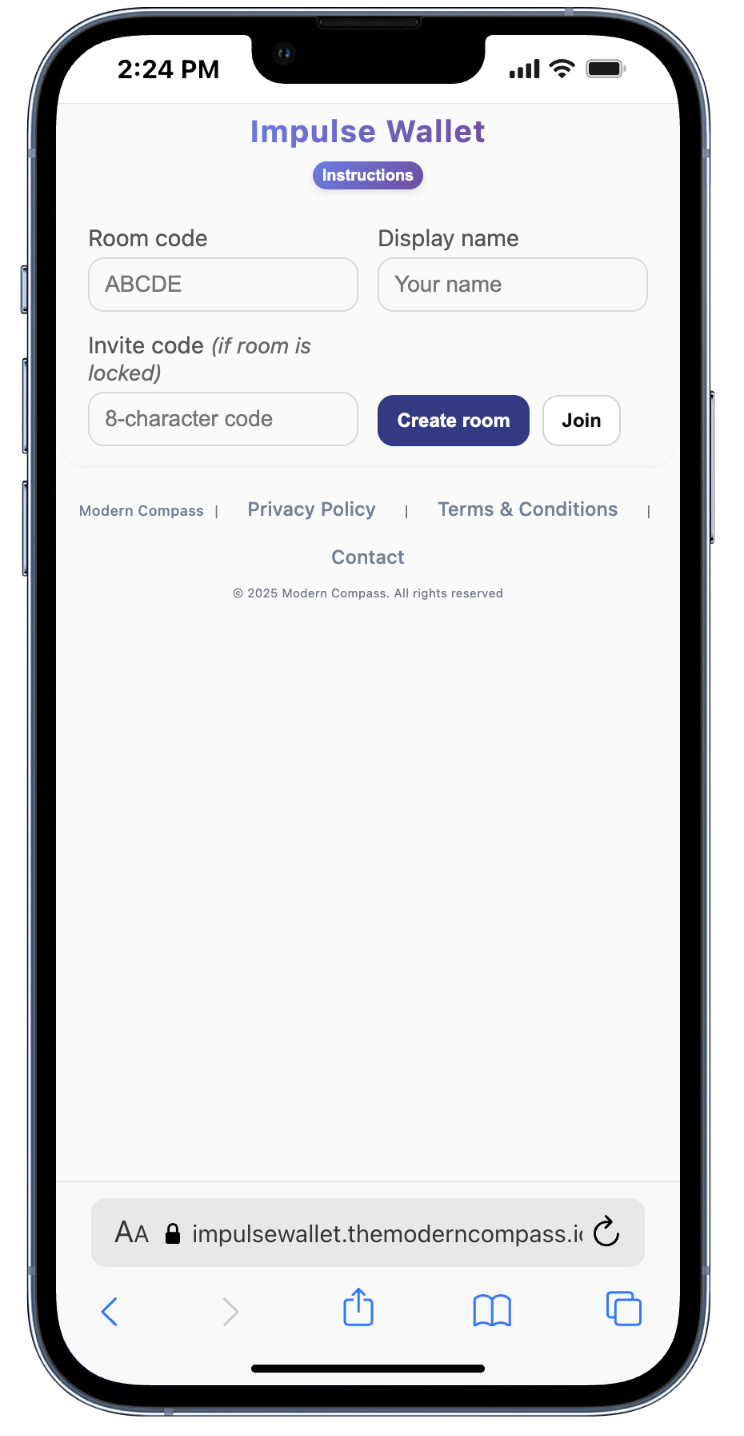
The initial create/join room interface - your entry point to Impulse Wallet
Setting Up Focus Areas
Why Focus Areas Matter: Focus areas give your daily actions meaning and direction, but remember - they're completely private to you. Other room members can't see your specific focus areas, only your overall progress.
Important: Actions Can Go Beyond Focus Areas
Your deposits and withdrawals don't have to connect to your focus areas! If something positive happens in any area of life, give yourself credit. Examples:
- Choosing Michelob Ultra over a sugary margarita
- NA beer instead of regular beer
- Any conscious positive choice, even if it's not in your tracked areas
Available Focus Areas:
- Positive areas: Eat Healthy, Exercise, Gratitude
- Resistance areas: Scrolling, Snacking, Spending, Booze, Procrastination
- Custom areas: Add your own specific focus areas
How to Set Them:
- Click the "Weekly Focus" button in the header
- Choose 2-3 areas from preset options or add custom ones
- Click "Save"
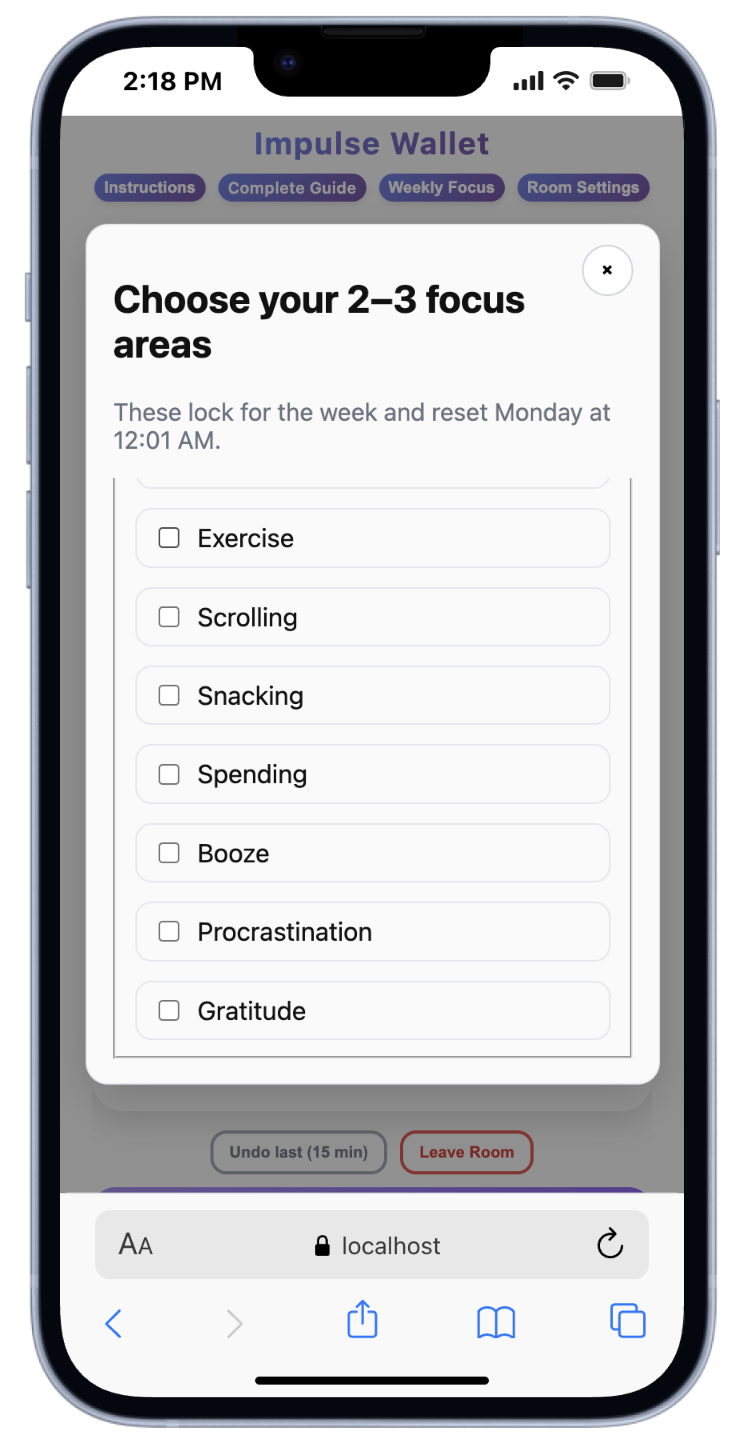
The weekly focus picker modal - choose 2-3 areas that matter to you this week
Important: Focus areas lock for the week and reset every Monday at 12:01 AM. You can have up to 3 areas active at once.
Making Your First Transactions
Deposit (+$1) Examples:
- "Chose water over soda"
- "10-minute walk"
- "Resisted checking phone"
- "Finished work task instead of procrastinating"
Withdrawal (-$1) Examples:
- "Scrolled for 30 minutes"
- "Ordered takeout instead of cooking"
- "Skipped morning routine"
- "Impulse bought coffee gadget"
15-Minute Grace Period
Made a mistake? Click "Undo last (15 min)" to reverse your most recent transaction within 15 minutes.
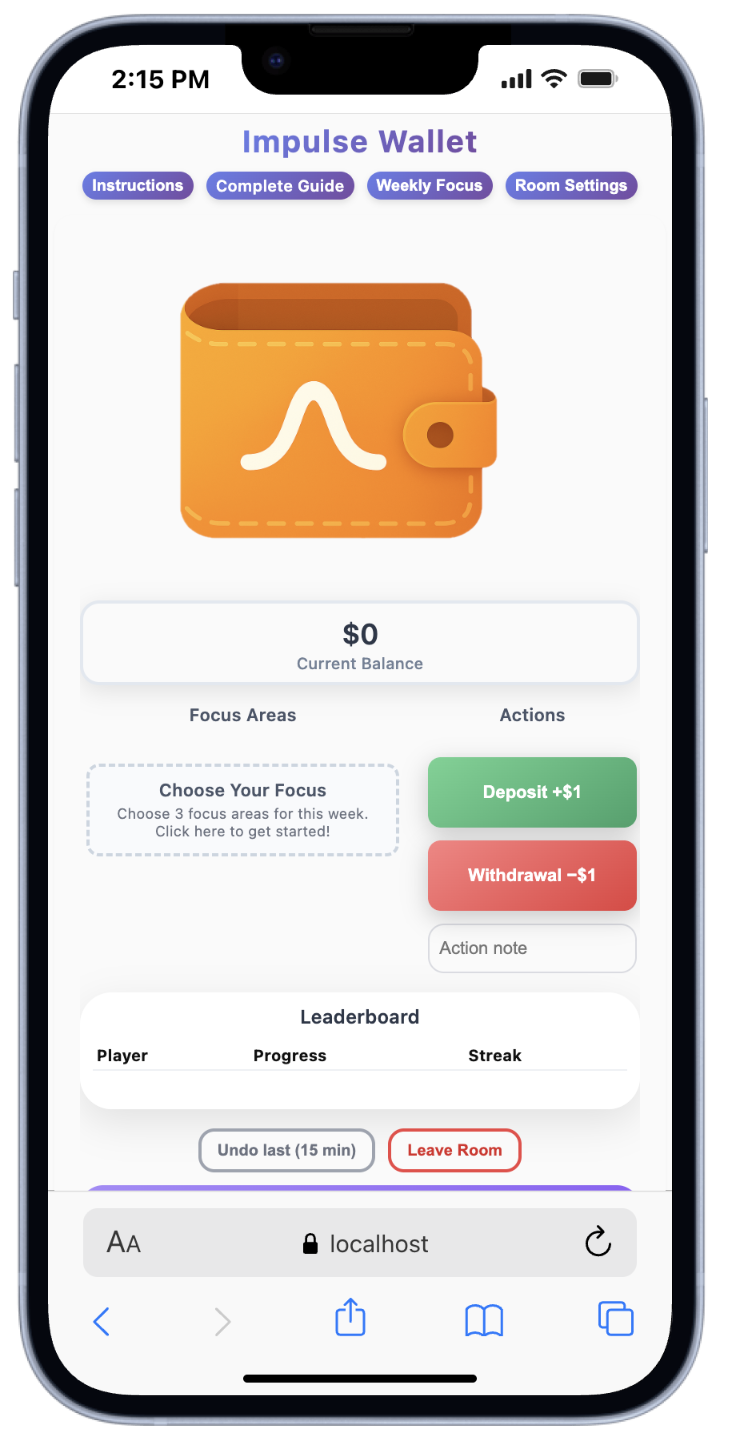
The main wallet interface showing your balance, action buttons, focus areas, and room leaderboard
The Virtual Wallet System
How the Dollar System Works
Simple Decision Framework: Every choice becomes a simple question: "Is this a +$1 or -$1 moment?"
The "Intentional Effort" Concept
Every $1 should represent conscious effort, not routine habits. If something has become automatic and requires no effort (like intermittent fasting you've done for months), it doesn't earn a deposit. Focus on choices that require intentional decision-making.
Logging Beyond Focus Areas
Your deposits can come from ANY positive choice in life, not just your selected focus areas. Examples:
- Choosing a healthier drink option at dinner
- Taking the stairs instead of elevator
- Being kind to a difficult person
- Any moment where you choose the better option
Balance & Streaks
- Your Balance: Starts at $0 each Monday, can go positive or negative, represents your overall momentum
- Streak Tracking: Consecutive deposits without withdrawals - withdrawals reset streaks but don't erase progress
- Focus: Streaks measure consistency, not perfection
Weekly Reset System
Every Monday at 12:01 AM:
- Your balance returns to $0
- Streaks reset
- You can choose new focus areas
- Fresh start with lessons learned
Why Weekly Resets Work: They prevent long-term shame spirals, allow for life's natural ups and downs, keep the system feeling fresh, and align with natural weekly rhythms.
Weekly Focus Areas
Choosing Effective Focus Areas
The 2-3 Rule
Choose 2-3 areas maximum. More areas lead to decision fatigue and tracking overwhelm.
Area Categories
Health & Wellness
- Eat Healthy
- Exercise
- Sleep routine
- Hydration
- Meditation/mindfulness
Productivity
- Work focus
- Procrastination resistance
- Learning/reading
- Organization
- Digital boundaries
Social & Emotional
- Gratitude practice
- Relationship building
- Communication
- Self-care
- Stress management
Financial
- Spending control
- Saving habits
- Budget adherence
- Impulse purchase resistance
Custom Focus Areas
Good Custom Examples:
- "Morning pages writing"
- "Call family weekly"
- "Meal prep Sunday"
- "10 minutes tidying"
Avoid These:
- Too vague: "Be better"
- Too many areas at once
- Overly complex requirements
Weekly Balance Strategy: The $10 Pattern
Understanding Your Balance Patterns
Your weekly balance tells a story about your goals and self-expectations.
If you're hitting +$10 every week:
- Your goals might be too easy
- You're not pushing yourself forward enough
- Consider adding more challenging focus areas
- Look for areas where you can stretch yourself
If you're hitting -$10 every week:
- Re-evaluate your focus areas - you might be too hard on yourself
- Consider if your areas are realistic for your current life situation
- Add "quick hit" positive focus areas to balance challenging ones
- Remember: progress over perfection
The Sweet Spot:
Aim for a balance that fluctuates week to week, sometimes positive, sometimes negative, but always teaching you something about your patterns and growth edges.
Focus Area Strategy: Quick Hits vs. Challenges
Balancing Your Focus Areas
When struggling with challenging areas (like "eating healthy" where you might hit -$1 frequently), add "quick hit" positive areas to maintain momentum.
Quick Hit Examples:
- "Tell myself something I like about myself" (2-minute task, multiple times daily)
- "Practice gratitude" (can be done anywhere, anytime)
- "Take three deep breaths" (instant positive action)
- "Send a kind text to someone" (quick, meaningful action)
- "Drink a full glass of water" (simple health win)
Why Quick Hits Work:
- They provide easy +$1 opportunities to balance out challenging areas
- Build positive momentum when facing difficult behavior changes
- Create successful patterns that support bigger goals
- Prevent discouragement from repeatedly hitting -$1 on harder areas
Strategic Combinations:
- Week with "Stop Scrolling" (-$1 heavy)? Add "Gratitude practice" (+$1 easy)
- Week with "Exercise daily" (challenging)? Add "Morning affirmation" (achievable)
- Week with "No impulse buying" (hard)? Add "Compliment someone" (simple)
Creating & Managing Rooms
Why Use Accountability Rooms?
- 65% higher success rate when someone knows your goals
- Motivation through visibility without judgment
- Shared momentum when you see others succeeding
- Support system for tough moments
Creating Your First Room
- Generate Room Code: Click "Create room" and enter your display name - the system generates a unique 5-letter code
- Configure Settings: Access "Room Settings" to set privacy (Open vs Invite Only) and member limits (10-100 members)
- Share Your Room: Share the room code and invite code (if invite-only) with others
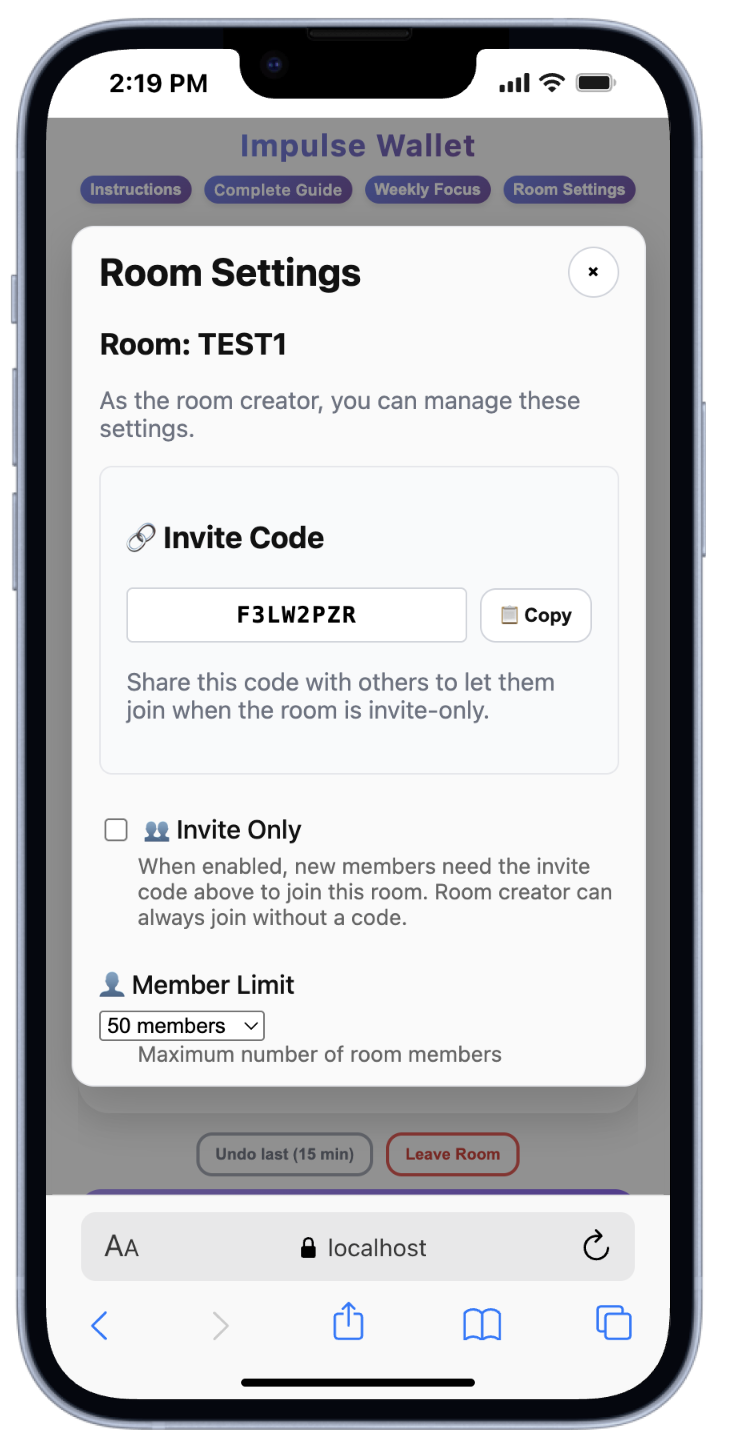
The room creation and settings interface - configure privacy and member limits
Room Creator Responsibilities
As the room creator, you can:
- Change room settings (privacy, member limits)
- View and manage the member list
- Generate and share invite codes
- Remove disruptive members (if necessary)
Joining Existing Rooms
How to Join a Room
- Get Information: You'll need the 5-letter room code, your display name, and invite code (if room is invite-only)
- Join Process: Enter room code, display name, and invite code (if needed), then click "Join"
- Verification: System checks room exists, isn't full, invite code is correct, and name isn't taken
What Happens When You Join
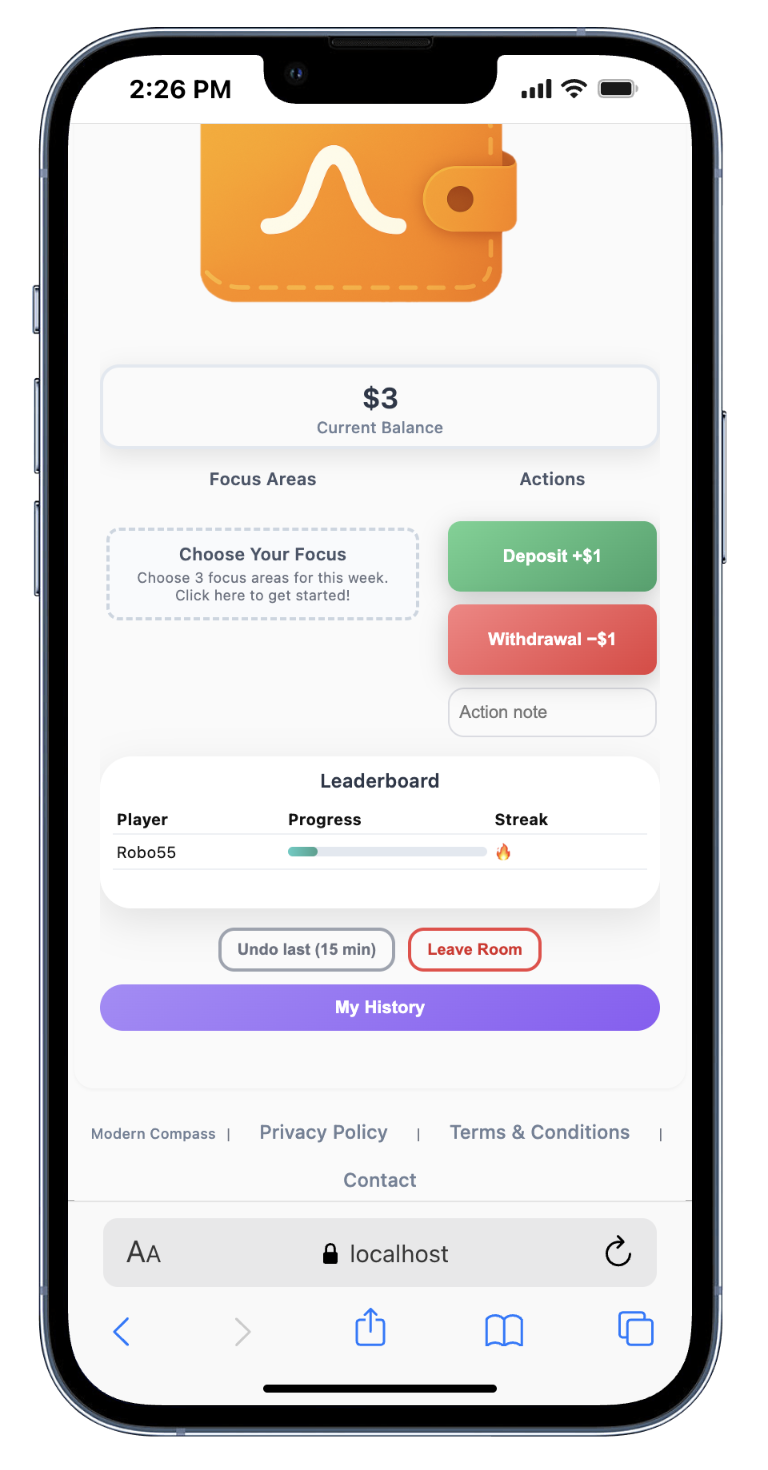
The room leaderboard showing member rankings, balances, and streaks - gentle accountability in action
- You'll see the room leaderboard with all members
- Your progress becomes visible to room members
- You can see others' balances and streaks (but not specific actions)
- Only your display name and progress numbers are visible
- Your focus areas are completely private - no one else can see what you're working on
- You can leave at any time
Room Etiquette
Be Supportive:
- Celebrate others' successes
- Don't judge setbacks
- Offer encouragement when appropriate
- Respect different approaches
Daily Usage & Best Practices
Building Your Daily Rhythm
Morning Setup (2 minutes)
- Check your current balance
- Review your focus areas
- Set an intention for the day
- Make your first deposit
Throughout the Day
- Log actions as they happen
- Use the note field for context
- Be honest about successes and slips
- Remember: awareness, not perfection
Evening Review (2 minutes)
- Check your progress
- Log any final actions
- Reflect on what worked
- Plan adjustments for tomorrow
Effective Action Logging
Good Deposit Notes (Remember: Any positive choice counts!):
- "20-minute walk after lunch"
- "Chose salad over burger"
- "Finished presentation instead of procrastinating"
- "Meditated for 10 minutes"
- "Chose NA beer over regular beer" (even if not in focus areas)
- "Took stairs instead of elevator"
- "Chose Michelob Ultra over sugary margarita"
- "Helped coworker with project"
Good Withdrawal Notes:
- "Scrolled Instagram for 45 minutes"
- "Ordered pizza instead of cooking"
- "Skipped workout because tired"
- "Impulse bought coffee gadget"
- "Was rude to customer service rep"
- "Chose the less healthy option when I had a choice"
Remember the Intentional Effort Rule:
- Only log things that required conscious effort
- Routine habits that happen automatically don't count
- Focus on moments of choice, not automatic behaviors
Why Notes Matter: They help you identify patterns, provide context for future reference, support self-reflection, and can be analyzed in your history.
Advanced Features
History & Analytics
Accessing Your History: Click "My History" button to choose your timeframe and review patterns.
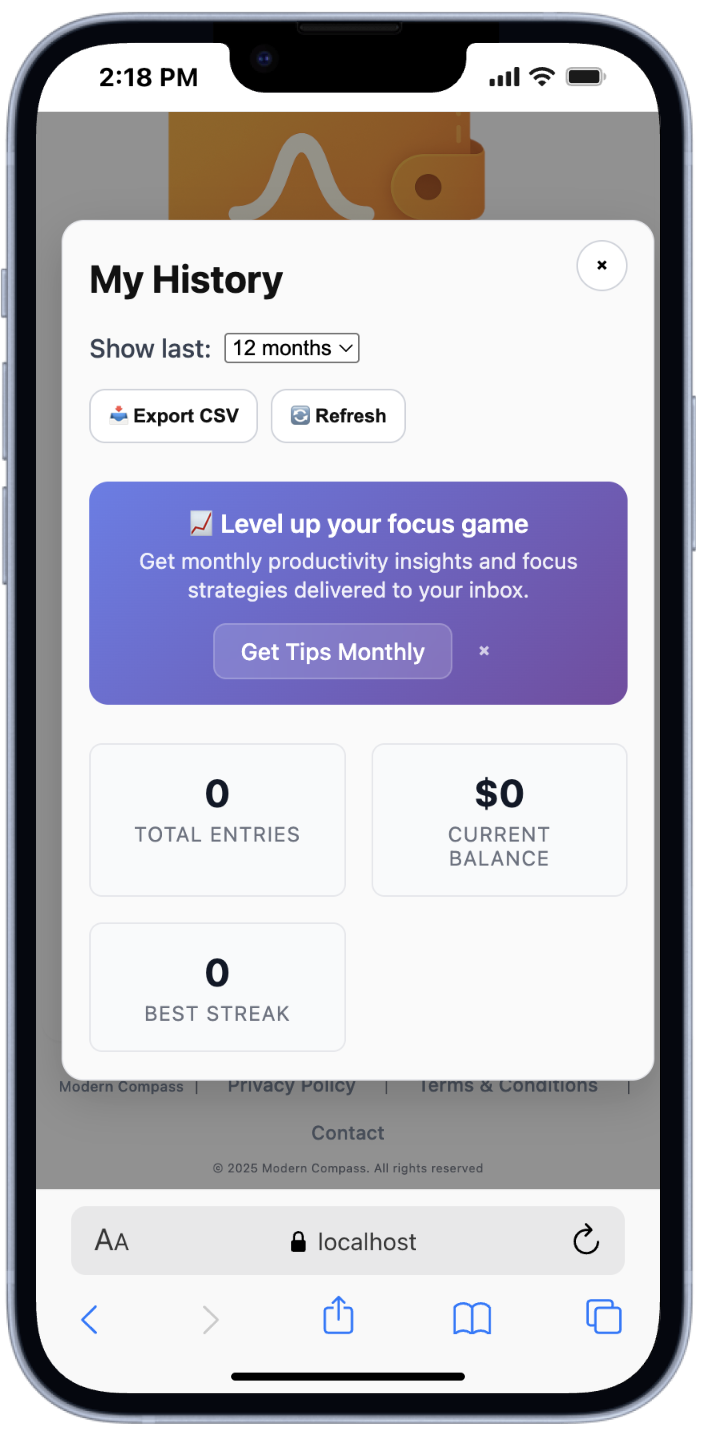
The detailed history modal showing your progress patterns, transactions, and analytics
Key Metrics:
- Total Entries: How actively you're tracking
- Current Balance: Your momentum this week
- Best Streak: Your longest consistent period
- Entry Patterns: When and how you typically log actions
Export Functionality: Click "📥 Export CSV" to download your data for analysis in spreadsheet software or to keep backup records.
Progressive Focus Strategy
Week 1-2 (Beginner):
- Exercise (any movement counts)
- Gratitude (one thing daily)
Week 3-4 (Intermediate):
- Exercise (30+ minutes)
- Gratitude (3 things daily)
- Procrastination resistance
Week 5+ (Advanced):
- Specific exercise goals
- Gratitude + acts of service
- Deep work focus periods
Troubleshooting
Technical Issues
App Won't Load:
- Clear browser cache and cookies
- Try incognito/private browsing mode
- Check internet connection
- Try a different browser
- Contact support if issue persists
Common User Issues
"I forgot to log something":
Log it as soon as you remember, be honest about timing in the note, don't stress about perfect timing, and focus on building the habit of awareness.
"My balance is negative":
This is normal and expected! Focus on learning, not the number. Look for patterns in your withdrawals, plan strategies for common triggers, and remember: Monday brings a fresh start.
"I keep forgetting to track":
Set phone reminders for morning and evening, link tracking to existing habits (meals, commute), start with just morning and evening logging, and use the note field to capture multiple actions at once.
Tips for Success
Week 1: Foundation Building
Your First Week Goals:
- ✅ Log something every day (even if it's a withdrawal)
- ✅ Choose 1-2 manageable focus areas
- ✅ Use the note field to capture context
- ✅ Experience the weekly reset on Monday
Mindset for Week 1:
- Curiosity over judgment: You're learning about your patterns
- Consistency over intensity: Daily logging matters more than big actions
- Experimentation: Try different times of day for logging
- Patience: The habit of tracking is more important than perfect tracking
Building Long-Term Success
Month 1: Habit Formation
- Focus on consistent daily logging
- Learn your patterns and triggers
- Experiment with different focus areas
- Build comfort with the system
Month 2: Optimization
- Refine your focus area choices
- Develop strategies for challenges
- Consider joining or creating a room
- Start analyzing your history
Month 3+: Integration
- Impulse Wallet becomes natural
- Use insights for meaningful changes
- Help others get started
- Customize to match evolving goals
Remember: You've Got This!
Core Principles to Remember:
- Progress over perfection: Every entry is valuable data
- Curiosity over judgment: You're learning about yourself
- Consistency over intensity: Daily tracking beats perfect balance
- Growth over guilt: Withdrawals are learning opportunities, not failures
Remember: Impulse Wallet is about building self-trust through awareness and gentle accountability. Every entry is progress, every week is a fresh start, and every choice is an opportunity to strengthen the promises you make to yourself.
Ready to transform your self-control into a game you actually want to play? Start with one focus area and one honest entry. You've got this! 🎯